A Guide to Daily & Monthly Maintenance
Keeping your tools in good condition doesn’t just extend their life—it helps them work better, feel better in hand, and reflect the value of the craftsmanship behind them. Whether it’s secateurs, shears, or knives, proper maintenance keeps them ready to perform and reduces long-term wear. Here’s how we recommend looking after your tools.
Daily Maintenance – The Simple Habit That Matters
Wipe after every use. Always.
Moisture is the enemy of any blade. If your tools get wet—either from plant sap or water—wipe them dry immediately with a clean cloth.
Sap matters too.
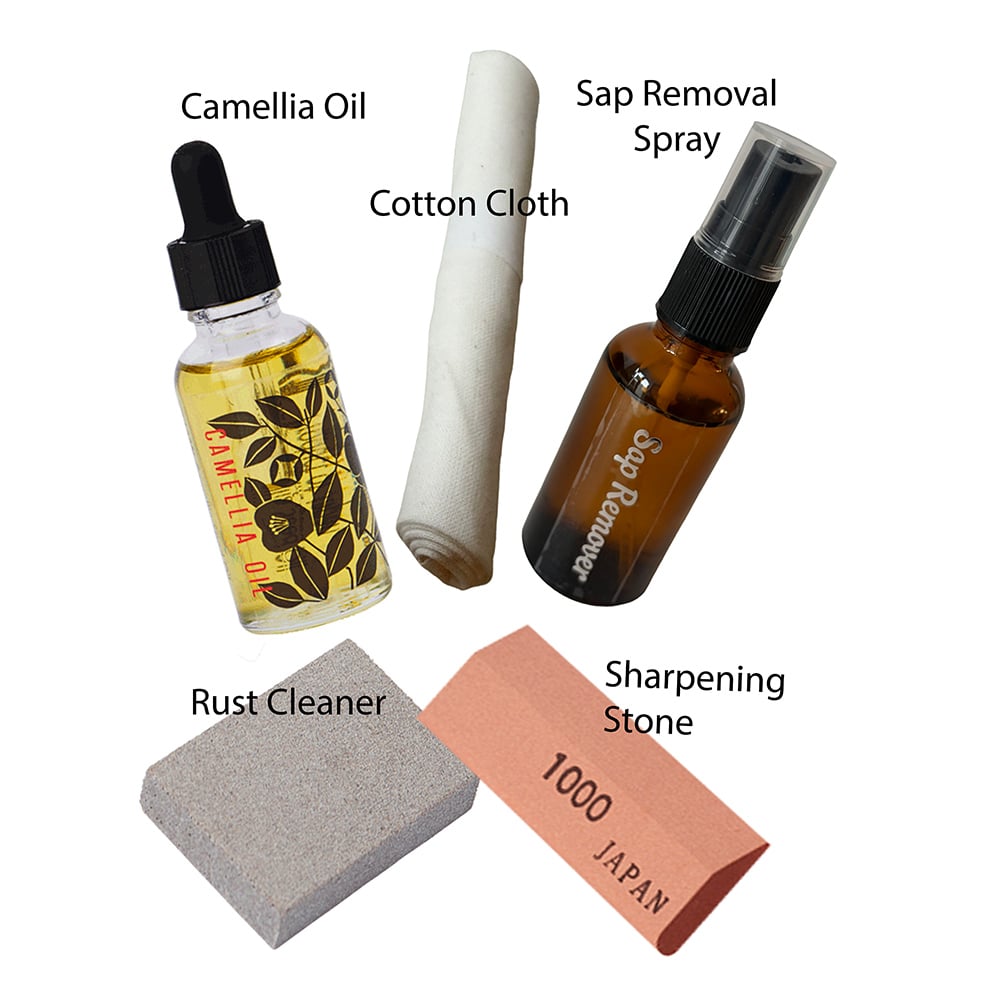
Some plants, like jasmine, release heavy sap that can build up and affect your blade’s performance. After cutting sappy plants, clean your tools with WD-40 or a specialised sap cleaner.
Leaving the sap to sit only makes it harder to clean later—regular light cleaning saves time in the long run.
Monthly Maintenance – A Deeper Clean
Over time, plant sap and fine particles settle inside the joints of your tools. This buildup can make them stiff or misaligned, even if the blade still looks sharp.
Clean the Joints Thoroughly
Generously apply sap cleaner into the joints and let it sit for a few minutes. Then, shake the tool until no liquid comes out—this removes hidden gunk inside.
For Heavy Build-up
If there’s a lot of sap, soak the tool in warm water for 10–15 minutes. Sap is water-soluble, and this helps loosen it. Be sure to remove all water from the joints afterward—shake it thoroughly until it’s dry to prevent rust.
Tools & Products to Use
We recommend using a rust and sap remover from the Shokunin Store range. When cleaning, be gentle—especially on the back of the blade. It’s okay if it doesn’t come clean in one go. Repeat the same process after a few days and you’ll see gradual improvement.

Professional Tips: From the Field
Our trusted users share their practical advice:
- Use a rubber eraser-type cleaner to gently scrub sap and rust from your tools.
- When cleaning the back of the blade, go very gently. For other areas, avoid rubbing the blade edge directly. If unsure, consult the maker.
- “It’s okay if you can’t remove all the sap at once. Even repeating the process weekly will slowly make the tool cleaner.”
Final Step: Oil It Well
Once your tools are clean and dry, apply camellia oil.
Yoshioka Hamono advises applying it to the joints and where the blade moves, but many of us apply it more broadly—anywhere prone to rust.

Deep Rust Care
If your tools are fully rusted, here’s what one of our pro users does:
- Wet the tool and spray with a mix of detergent, bicarbonate soda, and washing soda.
- Scrub with a nylon brush (or a brass brush gently, avoiding the edge).
Sharpening – When & How Often?
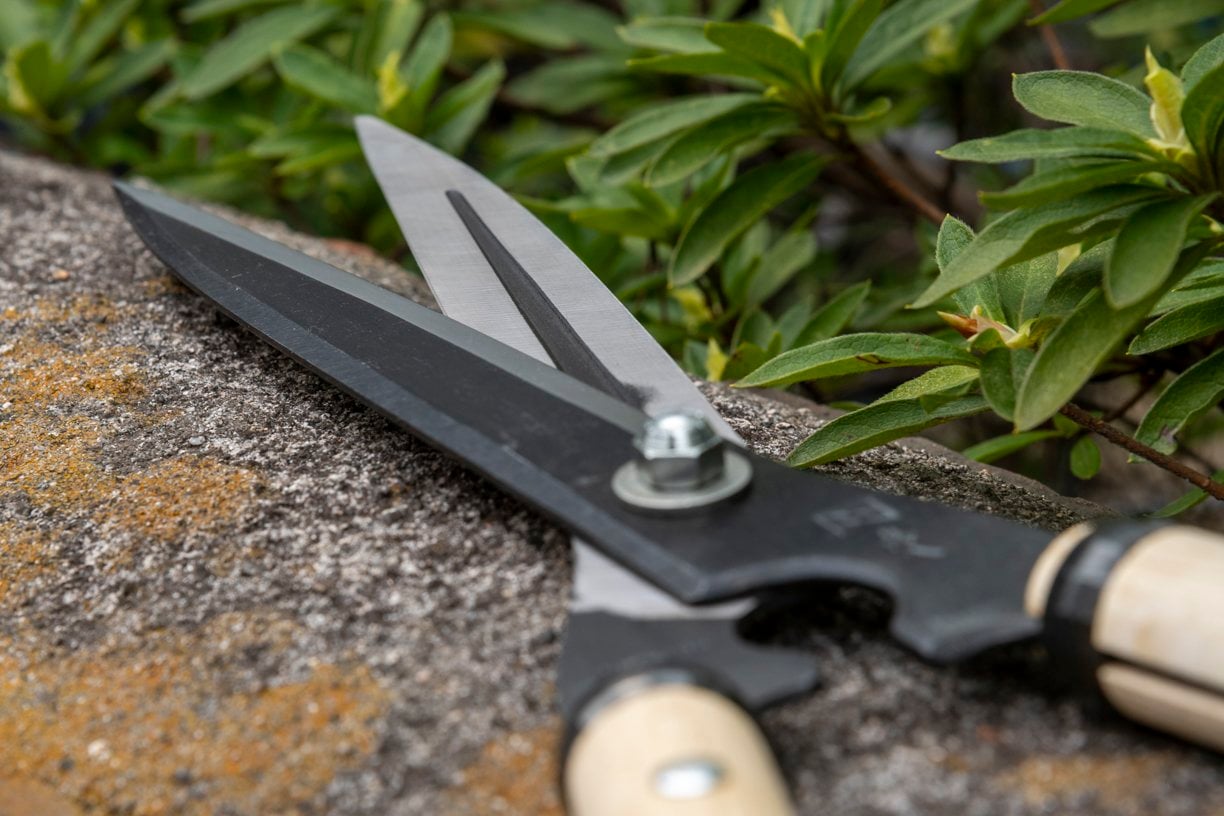
Thanks to the high-grade materials used by makers like Yoshioka Hamono, the blade typically retains sharpness for a long time—even with daily use. Rather than sharpening too frequently (and risking damage), consider sending your tool for professional maintenance once every 1–2 years.
The reason tools feel dull isn’t always the blade itself—it’s often the buildup of grime that shifts the alignment. So regular cleaning of both the surface and the joints may be more important than sharpening.