
Export and overseas sales support
SUCCESS IN OVERSEAS MARKETS CAN BE GREATLY AFFECTED BY "SMALL DIFFERENCES"
Research is essential to succeeding in overseas markets. Simple translation is insufficient; understanding the target market’s culture and consumer psychology is crucial, allowing for appropriate decisions about what to change and what to keep. However, many Japanese companies fail to conduct sufficient market research and instead adjust their products and brands based on assumptions, often resulting in misguided adaptations. This often
leads to regretful outcomes, with many companies regretting leaving their products as they were or failing to sell.
Furthermore, the method of overseas sales itself can determine long-term success.
Many companies consider using a trading company when expanding overseas. Selling through a trading company certainly offers benefits, such as securing distribution channels and reducing operational burdens. However, this is not the best choice for all companies. While trading companies are suitable for some companies, others may find that developing markets in-house leads to long-term growth.
Even if sales proceed through a trading company, it becomes difficult to directly understand end-user needs and market evaluations. As a result, brand value enhancement and product improvements based on direct customer feedback may be delayed. In particular, in a competitive environment that differs from that in Japan, understanding how your company’s products and services are perceived and making appropriate adjustments are essential to succeed in overseas markets.
TO AVOID ENDING OVERSEAS SALES WITH DISAPPOINTING RESULTS

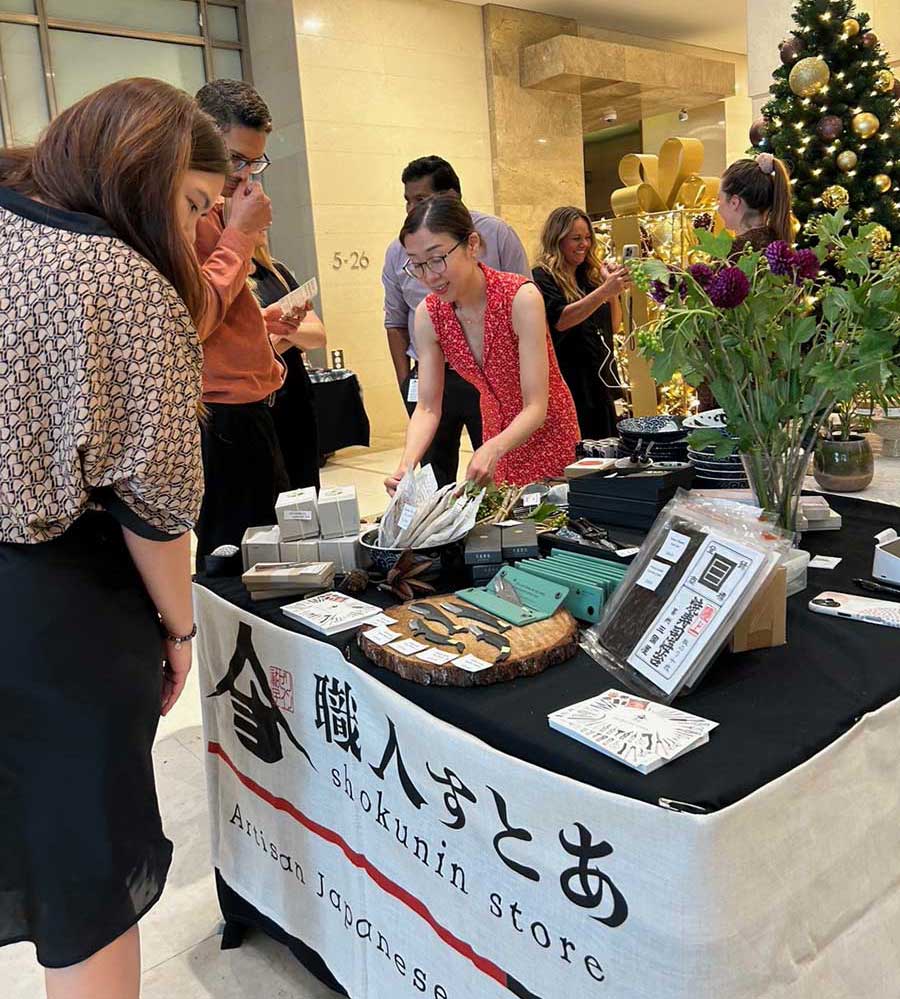
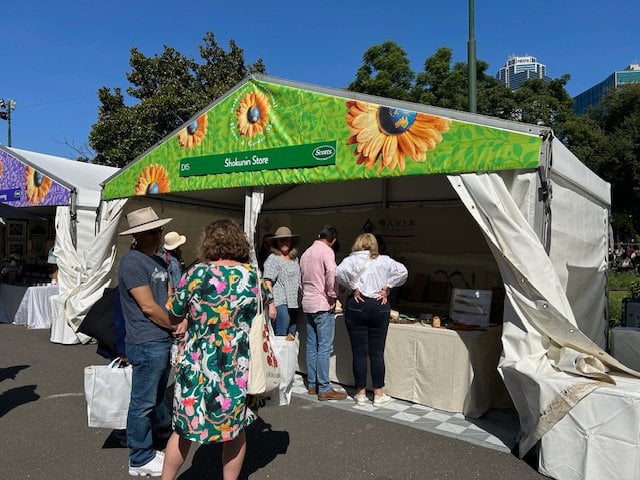
Competitors and selling points may differ between Japan and overseas markets. Furthermore, translation does not necessarily mean localization (adjusting and optimizing for an overseas market). Whether a copy is translated correctly into English and whether it functions effectively as copy are completely different issues. For example, translating “That’s right, let’s go to Kyoto” as “I decided to go to Kyoto” may convey the meaning, but it will lose its impact as advertising. Translation alone is insufficient; it is necessary to adjust the expression to resonate with the target market. This step may seem small, but it is actually the key to success.
Before changing the product design, printing thousands of flyers, or implementing advertising or strategies, consider how your target audience feels, where your product or service is positioned, and what you should add and subtract. Simply checking with a partner close to your target audience in advance can make a big difference.
Starbucks initially withdrew from Japan, but was successful after teaming up with local partner Sazabi and revising their strategy. Similarly, while many Australian restaurants struggled to enter the Japanese market, the Australian lifestyle cafe “bills” partnered with the Japanese PR firm Sunny Side Up and successfully expanded to eight locations across Japan through a sound strategy.
Kinki Nippon Tourist changed its English company name to “KNT” because the word “Kinki” (region) sounded unsuitable as an official name in English-speaking countries. Similarly, automobile manufacturers have changed their names. Examples such as “Hustler,” “Venza,” “Cedric,” and “Roadster” demonstrate the importance of appropriate naming and branding tailored to the market and culture, as different impressions are perceived differently depending on the market.
The Japanese market is shrinking, and domestic competition from imports and competitors is intensifying, making companies more susceptible to price wars. Therefore, expanding sales channels into new overseas markets and increasing demand is an effective option for developing appropriate strategies within limited resources and aiming for more stable growth.
We provide practical localization (adjustment and optimization for overseas markets) support to Japanese small and medium-sized enterprises that are considering exporting or selling overseas, as well as to small and medium-sized Japanese companies that have already started selling overseas but are facing challenges.
SERVICE DETAILS

Accurately gather the information necessary for overseas expansion. Conduct research that can be carried out even with a limited budget, and support sales strategies based on market potential and perceptions.

Accurately gather the information necessary for overseas expansion. Conduct research that can be carried out even with a limited budget, and support sales strategies based on market potential and perceptions.

Building brand power that will gain consumer trust and become a reason for your brand to be chosen. Proposing PR, trade shows, and advertising strategies for English-speaking markets, and assisting with applications for overseas design and technology awards.

We support issues that arise after exporting or starting overseas sales, such as “I’m worried about responding to inquiries in English,” “We don’t have staff who can handle inquiries in-house,” and “What are transactions excluding consumption tax?”
FROM THE FIELD OF EXPORT AND OVERSEAS SALES - EXAMPLES OF INSIGHTS AND SUGGESTIONS
is not just a translation; it involves understanding the local market and adapting it to suit it. It requires making decisions based on the common sense, perspective, and sensibilities of the target audience. Even a simple translation can lead to unexpected misunderstandings. In Japan, national exams and skill certifications are often listed on business cards as “Second Class XX Technician.” You’ll often see this translated as “Second Class XX Technician.” In fact, searching the web for this translation yields “Second Class.” This has a similar nuance to “Class B” in English, which may not convey the intended meaning. To indicate “qualifications” or “accreditation” in English, adding words like “Certificate,” “License,” or “Qualification” and writing something like “XX Technician Level 2” or “Certified XX Technician – Level 2” accurately conveys the value of the qualification.
I often hear the opinion that “keeping the packaging and labels in Japanese is better because it emphasizes that the product is made in Japan.” However, this depends on the case. Labels that are entirely in kanji can lead to the mistaken impression that the product is made in China. For example, when a Japanese beer entered the Australian market, it promoted itself using the same Japanese advertising. In this case, the simple appealing message of “Japanese beer has arrived” made the product immediately recognizable as beer, and the company likely decided that this was sufficient without the budget for new English advertising. On the other hand, even if a seasoning or food product is familiar in Japan, if its existence is unknown in overseas markets, packaging in Japanese alone can be difficult to communicate to consumers, increasing the barrier to purchase. Furthermore, unlocalized packaging can be a disadvantage when trying to get a product to be carried by major local supermarkets and distribution networks. If you don’t have the budget for localization from the start, you can consider adjusting the packaging and labeling to suit the local market once sales begin to occur.
Local graphic designers and copywriters were hired to
avoid using plastic and increase the product’s appeal with paper box packaging
Many products shipped from Japan, including pottery, jewelry, and food ingredients, are wrapped in bubble wrap and other plastic packaging. However, while many developed countries are working to reduce plastic use, there is often a sense that Japanese companies’ sensibilities are at odds with international standards. Furthermore, while in Japan, cooking utensils such as peelers are typically sold wrapped in bags or protective materials, many developed countries tend to value sustainable and environmentally friendly packaging over hygienic packaging. As a result, packaging adopted by Japanese companies with “good intentions” can sometimes be out of line with international market norms and leave an unexpectedly negative impression. In some cases, this can even lead to distrust among environmentally conscious consumers. You may feel that you would rather allocate the packaging budget to the product. It is necessary to determine what is necessary and what should be avoided based on the market.

Using biomass glue for transparent labels made from recycled PET.
Environmental consideration is not just a plus, it’s common sense.
Resolving the Language Barrier with AI:
“I’ve made my website in English, but what if I get inquiries in English?” I often hear such concerns. Many companies, even those interested in exporting and selling overseas, hesitate due to the language barrier. However, once they actually try it, most find that they didn’t need much support or that they received inquiries in English, but it was fine. We live in an age where AI can help with communication. Whether it’s Russian, Portuguese, or Persian, the other party will send you messages in their own language. Similarly, you can reply in Japanese and they’ll understand. Rely on experts in the field when necessary. However, we don’t recommend outsourcing something that can be easily solved and spending a lot of money. Most companies are willing to give it a try if they have backup, saying things like, “We’ll support you until your concerns are resolved” or “We’ll help you if anything comes up.” It’s easier said than done. In fact, after overcoming their initial concerns, many find that the experience was easier than they expected.

The increase in exports has been a great help.” This single phrase is our greatest driving force. Localization is the door that takes you from competing with 120 million people to competing with 8.1 billion people. The market in which your products and services are needed may be right there. Why not take a step overseas with us?
PROFILE

YUKO NAKAO